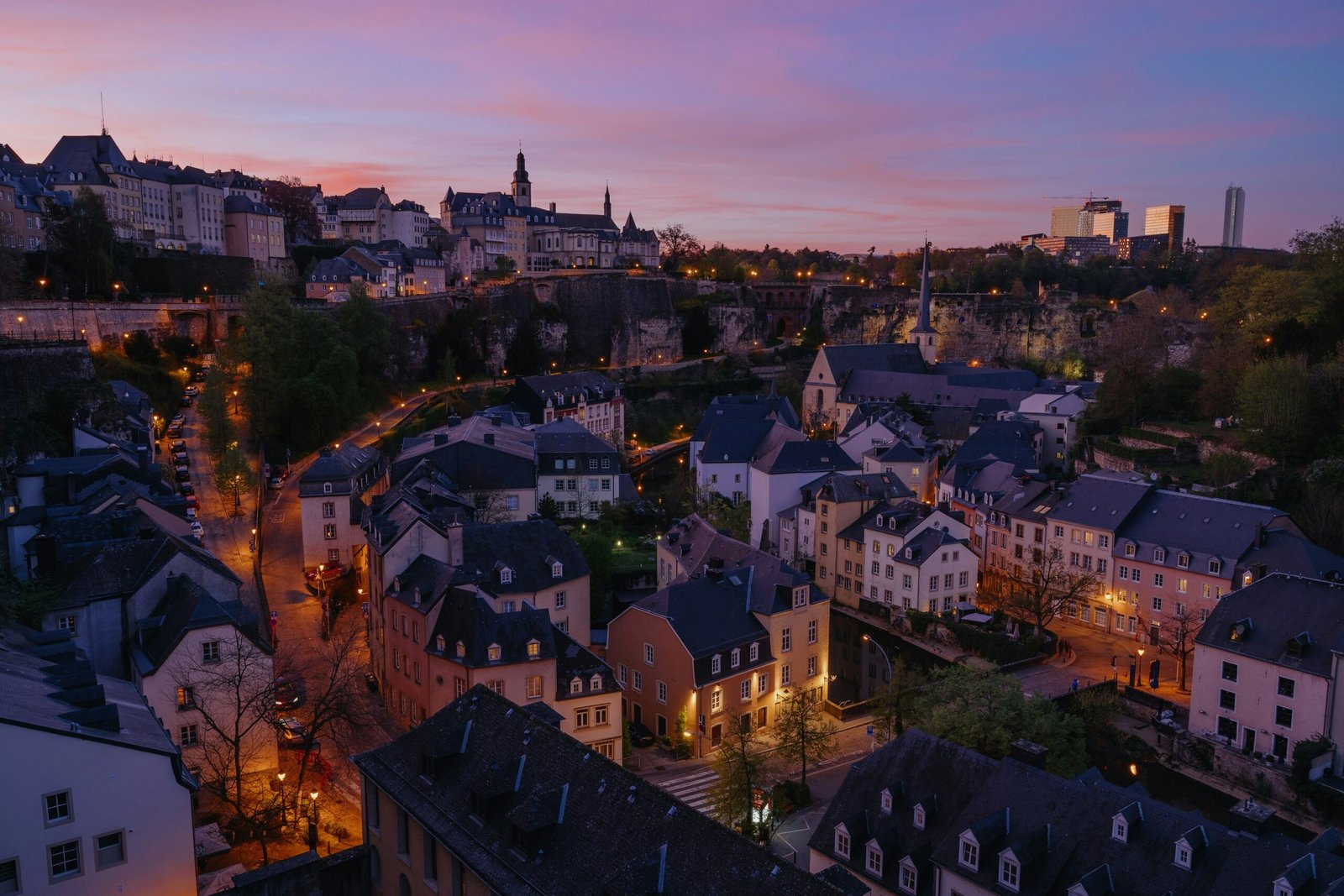

Six hundred square kilometres. Six hundred and twenty thousand inhabitants. Eleven Michelin-starred restaurants for that density — one of the highest per capita in the world. Luxembourg long remained a well-kept gastronomic secret, eclipsed by the country’s financial reputation. Recent years have transformed this discretion into evidence: starred chefs multiply, Moselle cellars gain international recognition, confidential addresses become an art of living that one cultivates. For those residing in Luxembourg or staying regularly, local gastronomy offers an unsuspected richness. For those who have just moved here, it is one of the best ways to understand the country. Maison Silaïa — based in Luxembourg — shares here her address book cultivated over the years.
Gastronomic Luxembourg: a well-kept secret
For a long time, Luxembourg’s gastronomic image was eclipsed by the country’s financial reputation. Major banking centre, European capital of institutions, the Grand Duchy first made itself known for its economy. Yet, in the silence of its valleys, on the banks of the Moselle, in the lanes of the old town, a culinary scene of remarkable density had been developing since the 1980s.
Today, the verdict is unequivocal: Luxembourg counts eleven Michelin-starred restaurants for six hundred and twenty thousand inhabitants — one of the highest densities per capita in the world, surpassing France, Italy, Spain. This concentration owes to several factors: immediate proximity to the great French, German and Belgian traditions; the presence of a demanding international clientele (European institutions, financial centre, high-end expatriates); the availability of exceptional products thanks to integrated European logistics; and the work of local chefs, many trained in the greatest French brigades before returning home.
For our clients residing in Luxembourg, settling here, or staying for professional travel, understanding this gastronomic scene transforms the country experience. Beyond the great tables, Luxembourg conceals a true culture of fine eating — family cellars on the Moselle, neighbourhood caterers, weekly markets, traditional brasseries. It is this complete fabric that makes the Luxembourg art de vivre.
Starred tables: high gastronomy in Luxembourg
The eleven Michelin stars distribute between the capital, the Moselle valley, the Luxembourg Ardennes and the Oesling region. Four establishments deserve to be known as priorities.
Ma Langue Sourit (Oetrange) — the second star
Cyril Molard’s restaurant set in Oetrange, fifteen minutes from Luxembourg City centre. Two Michelin stars achieved. Contemporary French cuisine, remarkable technique, carefully selected products. The intimate dining room welcomes fewer than thirty covers per service. Reservations indispensable six to eight weeks ahead. One of the two best tables of the Grand Duchy, regularly frequented by the European gastronomic community.
Léa Linster (Frisange) — the legend
Léa Linster, first and only woman to win the Bocuse d’Or (1989), has held her eponymous restaurant in Frisange for several decades. One Michelin star consistently maintained. Cuisine blends French tradition, Luxembourg local influences and personal signatures (her famous lamb saddle in potato crust). It is an institution. For clients wishing to understand the country’s culinary tradition, this is the reference address.
Mosconi (Luxembourg City) — the starred Italian table
Ilario Mosconi’s restaurant set in a historic mansion in the Grund (the old quarter at the foot of the corniche). Two Michelin stars. Northern Italian cuisine, refined, with one of the most beautiful Italian wine lists in Central Europe. The atmosphere, both elegant and warm, attracts a connoisseur clientele.
Other starred references and new ambitions
Beyond these names, several establishments complete the starred scene: Les Roses (Stadtbredimus), Two6Two (Esch-sur-Alzette), Apdikt (Steinfort), Le Sud (Bohey), La Distillerie (Bourglinster, in a castle). Each with its character, cuisine, setting. This geographic diversity means the best tables are rarely concentrated in the capital — they invite discovering the country through gastronomic weekends. For our clients, the gastronomic address book is constantly refreshed per evolutions and openings.
“Gastronomic Luxembourg is discovered like a rare book: one does not open it by chance. But once opened, one does not leave it.” — Maison Silaïa
Cellars, wine bars and Moselle œnotourism
Luxembourg has its vineyard. Forty-two kilometres of slopes lining the Luxembourg bank of the Moselle, between Schengen in the south and Wasserbillig in the north. These vineyards, classified AOP since 1991, produce mainly white wines (Pinot Blanc, Pinot Gris, Riesling, Auxerrois, Rivaner) and Crémants de Luxembourg whose quality has considerably progressed in recent years.
The Luxembourg Moselle: a recognised terroir
Soils mixing schists and limestone, southeast exposure, continental climate tempered by the river, create the conditions for wines of particular finesse. Luxembourg wines have gained international recognition over the last decade — their crémants notably rank regularly among the best sparkling wines of Central Europe in competitions.
Domains to visit
Several domains welcome private visits and tastings by appointment. Domaines Vinsmoselle (historic cooperative), Caves Bernard-Massard (Grevenmacher, the country’s oldest crémant producer founded in 1921), Domaine Alice Hartmann (Wormeldange, one of the qualitative references), Domaine Mathes (Wormeldange-Wein), Domaine Pundel (Ahn). Each offers guided visits by the winemakers themselves, with commented tastings and direct purchase options. For interested clients, we organise Moselle days combining two or three domains, lunch in a local restaurant of the valley, then visit of a final domain in late afternoon.
Wine bars of the capital
Luxembourg City counts several wine bars established as enthusiast rendezvous. Vinoteca (Limpertsberg), Vino al Vino (centre), Sansibar (Place d’Armes) offer Luxembourg as well as European and international wine lists, in atmospheres sometimes intimate, sometimes lively. Mama Loves You (Clausen) combines trendy ambience and selective list. For those wishing to extend Moselle wine discovery, these bars are excellent introductions.
Confidential addresses: brasseries, caterers, markets
Beyond stars and cellars, Luxembourg gastronomic art de vivre composes of a fabric of daily addresses only regulars truly know.
Traditional brasseries
Brasserie Bosso in Limpertsberg, La Boucherie at several addresses, Le Café Français at the Theatre, Schuman’s near Place d’Armes: these brasseries propose more accessible cuisine, open lunch and dinner, ideal for business lunches or couple dinners without the formalism of a starred table. Menu blends French classics (steak frites, sole meunière), local influences (Judd mat Gaardebounen — smoked pork collar with broad beans), and seasonal dishes.
Caterers and fine boutiques
For resident clients or those hosting at villa or residence, several caterers offer quality services. Steffen Traiteur, Niederweiss, Loyens & Loeff (for institutions). Fine boutiques — Zenker (charcuterie), Rollinger (historic bakery-pastry), Oberweis (reference chocolaterie since 1964) — provide the best addresses for daily shopping or gifts. Our daily management team coordinates these supplies for our resident clients.
Weekly markets
The Place Guillaume-II market in Luxembourg City (Wednesday and Saturday) remains the reference gastronomic rendezvous. Local producers, cheesemongers, market gardeners, French and Belgian Moselle charcutiers, fishmongers. The Place d’Armes market (seasonal), neighbourhood markets (Bonnevoie, Limpertsberg, Cents) offer more modest alternatives. For those who enjoy cooking or hosting, these markets are the best fresh produce sources.
Notable international addresses
Luxembourg hosts several exceptional international addresses. Roma (contemporary Italian at Quartier Gare), Saké in Hesperange (high-end Japanese), Bricks (quality steak house at Limpertsberg), Le Trio (high-end kosher). These addresses testify to the international character of Luxembourg’s gastronomic fabric.
“In Luxembourg, gastronomy is not an occasional luxury. It is a way of life one learns, transmits, and shares.” — Maison Silaïa
Living gastronomy in Luxembourg: the Maison Silaïa method
For our clients settling in Luxembourg or staying regularly, we compose a gastronomic parcours adapted to their desires and rhythm.
The personal address book
From a client’s arrival, we compose a personalised address book. Restaurants for business lunches, tables for family dinners, confidential addresses for evenings with friends, caterers for receptions, suppliers for daily provisions. This book enriches over months per feedback and new discoveries.
Œnological weekends on the Moselle
For clients wishing to discover Luxembourg viticulture, we organise days or weekends on the Moselle. Visit of two or three domains with private tastings with winemakers, lunch in a valley restaurant, boat trip on the Moselle for clement seasons, accommodation in a charm house if needed. For œnology enthusiasts, we propose initiation courses on Luxembourg grape varieties.
Private dinners and receptions
For clients hosting at home, we coordinate the whole: private chef selected per desired menu, caterer if larger reception, sommelier if wine tasting, table service for formal dinners. Luxembourg cellars are often integrated into food-wine pairings to add a local dimension to international dinners.
Difficult reservations
Certain tables (Ma Langue Sourit, Léa Linster, Mosconi) close their reservations six to eight weeks ahead for Friday-Saturday evenings. For clients discovering these addresses or wishing to bring guests, we activate our direct relationships with directors to facilitate access, notably for visiting professional guests.
Frequently asked questions
How many starred restaurants in Luxembourg?
The Michelin Guide counts eleven starred establishments in Luxembourg. Ma Langue Sourit (Oetrange, two stars), Mosconi (Luxembourg, two stars), Léa Linster (Frisange, one star), and several other one-star establishments dispersed between the capital, Moselle and Oesling. This density makes Luxembourg one of the most starred countries in Europe per capita.
What is the Luxembourg vineyard worth?
The Luxembourg vineyard (Moselle) produces mainly white wines (Riesling, Pinot Gris, Pinot Blanc, Auxerrois) and crémants. Quality has considerably progressed over the last twenty years, and several domains (Alice Hartmann, Mathes, Pundel) are today internationally recognised. Luxembourg crémants regularly rank among the best sparkling wines of Central Europe.
Which addresses for business lunches in Luxembourg?
Brasserie Bosso, La Boucherie, Schuman’s, Le Café Français at the Theatre, Vinoteca for simpler lunches. Mosconi, Ma Langue Sourit, Léa Linster for more formal lunches. The choice depends on desired formalism level, available time (starred tables require two and a half hours minimum) and guest nature.
Does Luxembourg have a traditional cuisine?
Yes, several dishes embody Luxembourg tradition: Judd mat Gaardebounen (smoked pork collar with broad beans), Bouneschlupp (green bean soup), Gromperekichelcher (potato pancakes), Moselle fish fry, Quetschentaart (plum tart), Bamkuch (typical roll cake). Several traditional restaurants (Mousel’s Cantine, Bouneweger Stuff, Speltz) propose these dishes in their authentic version.
Can Maison Silaïa compose a Luxembourg gastronomic parcours?
Yes. For newly settled clients, we compose an adapted address book. For visiting clients, we organise gastronomic stays (Moselle weekend, starred dinners, private tastings). For home receptions, we coordinate private chefs, caterers, sommeliers. Let us speak in complete confidence about your project.
What if your next Luxembourg evening took shape today?
Gastronomic Luxembourg is discovered through initiation. Our teams — based in Luxembourg — remain at your disposal to compose your tables, cellars, receptions, in complete confidence.
Get in touch