

Cannes Film Festival 2026: How to Experience It Like an Insider
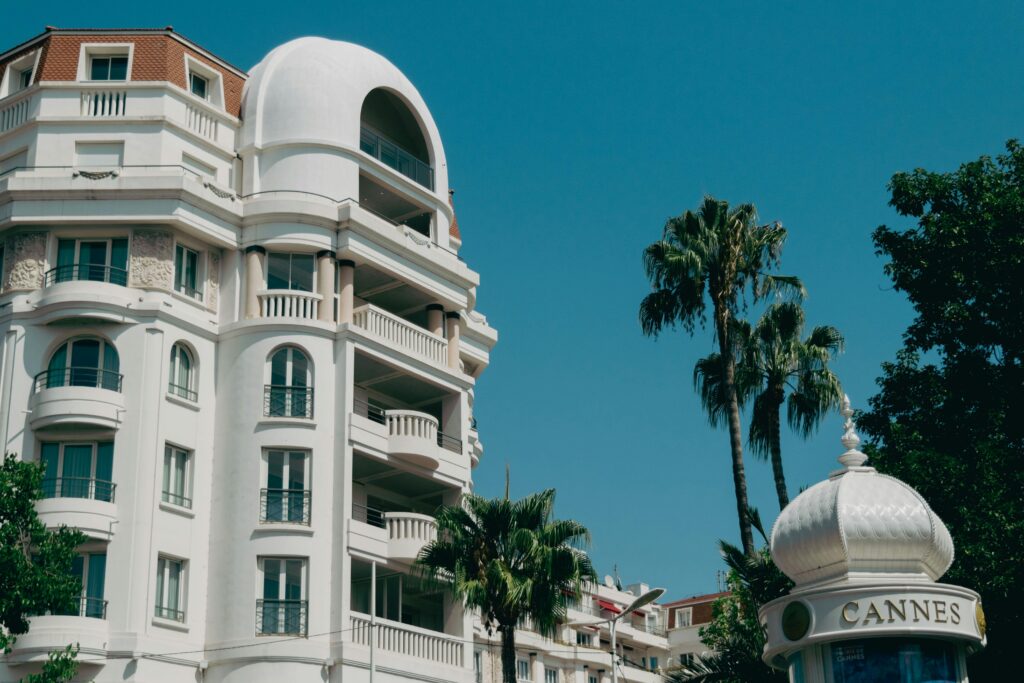
Twelve days. Two kilometres of waterfront. An industry, an art form, a parallel economy converging on the Croisette from 12 to 23 May 2026. The Cannes Film Festival is not a festival in the way others are. It is an institution, an ecosystem, an ephemeral capital where the fate of a film, the direction of a studio, the emergence of a talent and dozens of conversations that no press release will ever capture are all played out simultaneously. For our clients who divide their year between Saint-Barthélemy and the Mediterranean, these twelve days are a score to be deciphered. The red carpet is visible from anywhere in the world; the rest belongs to those who know where to position themselves, when to sit down, and when to disappear. Maison Silaïa composes these Festivals as one composes a scene: with attention, measure, and a keen sense of what takes place behind the curtain. Contents Cannes 2026: the twelve days that matter The geography of the Festival: knowing where to be and when The evenings that truly count Accommodation during the Festival: the art of positioning Access to screenings: the invisible codes Preparing your visit: the Maison Silaïa method Frequently asked questions Cannes 2026: the twelve days that matter The seventy-ninth edition of the Cannes Film Festival runs from Tuesday 12 to Saturday 23 May 2026. Twelve days exactly — a duration carefully calibrated to accommodate the main competition, the Marché du Film running in parallel, the parallel selections — Un Certain Regard, the Critics’ Week, the Directors’ Fortnight — and the infinite number of satellite engagements that constitute the real reason most people are there at all. In the public imagination, Cannes is a film festival. In the minds of professionals, it is the world’s largest market for audiovisual rights. More than fifteen thousand accredited guests gather to present, negotiate, sell, co-produce, raise funds and discover the teams of years to come. American studios come to scout European talent; Asian producers sign distribution rights; streaming platforms compete for arthouse films. Behind every visible festival-goer, five others are working in an apartment on the rue d’Antibes or in a private lounge at the Marché. It is this dual nature — public showcase and the world’s most concentrated professional salon — that makes Cannes singular. For our clients who come for their love of cinema, for the social dimension, for patronage or for investment, the real challenge is navigating between these two planes. Being present at the right moments on the Croisette, invisible at others. Knowing how to position oneself within the relevant circles, without being consumed by the official schedule. To come to Cannes as a tourist is to leave exhausted, without having understood what was truly at stake. To arrive prepared is to leave with three or four conversations that will shape your decisions for the next eighteen months. « Cannes is not visited — it is frequented. Twelve days where the Croisette becomes a stage, where every address is a room, and where one performs without rehearsal. » — Maison Silaïa The geography of the Festival: knowing where to be and when The Festival plays out on a reduced stage — two kilometres of coastline, a few perpendicular streets, a few elevated neighbourhoods — but each space has its function, its hour, its codes. To know this geography is already to have the advantage. The Croisette: a permanent theatre From the Palais to the Martinez, from the Hôtel Majestic to the Carlton, the Croisette is the visible stage of the Festival. This is where the red-carpet ascents unfold, the impromptu interviews, the orchestrated crowd moments. It is also where everyone crosses paths — and where, precisely, nothing of substance is said. The real conversations begin one floor above, in the private suites of the grand hotels, or slightly apart, in the confidential salons of the palaces. The Palais des Festivals and its invisible invitations The Palais is the cathedral of the Festival. The Grande Salle Lumière hosts the competition screenings; the Salle Debussy accommodates the parallel selections; the annexe rooms serve the Marché du Film. Gaining access requires accreditation — professional, official, or VIP — and knowing which screenings truly matter. Not all projections are equal: some are industry events, others are protocol moments, others still are the occasions where rumour is tested. Our clients who take part in red-carpet premieres do so knowing the precise stakes of each screening. The Marché du Film: the backstage of business Installed within the Palais and its annexes, the Marché du Film is a world unto itself. Fifteen thousand professionals, six hundred stands, thousands of confidential meetings. This is where half the world’s distribution contracts are signed. For a cinema investor, a producer or a client accompanying a project, the Marché is the true centrepiece of a Festival week. Our teams pre-position meetings with the relevant interlocutors, manage logistics between venues, and organise the informal dimension — dinners, cocktails — that extends commercial discussions. The heights of Super Cannes and Mougins: the private stage Above the Croisette, the elevated neighbourhoods shift in role. Super Cannes, La Californie, the hills above Mougins — these areas host the villas rented for the week by studios, investment funds, and independent producers. This is where private dinners, strategic meetings and parties that set the whole Croisette talking take place — with no photographer permitted inside. To be invited supposes being introduced. To be the host supposes having prepared the villa, its staff, its calendar, months in advance. The evenings that truly count The Festival is played out in the evening. Screenings fill the days; conversations occupy the nights. Three categories of evening compose this second Festival — the one that appears in no official programme. Dinners hosted by majors and independent producers Every studio — the American majors, the leading French groups, the Asian houses — organises one or several dinners during the week. Independent producers do the same on a more intimate scale. These dinners