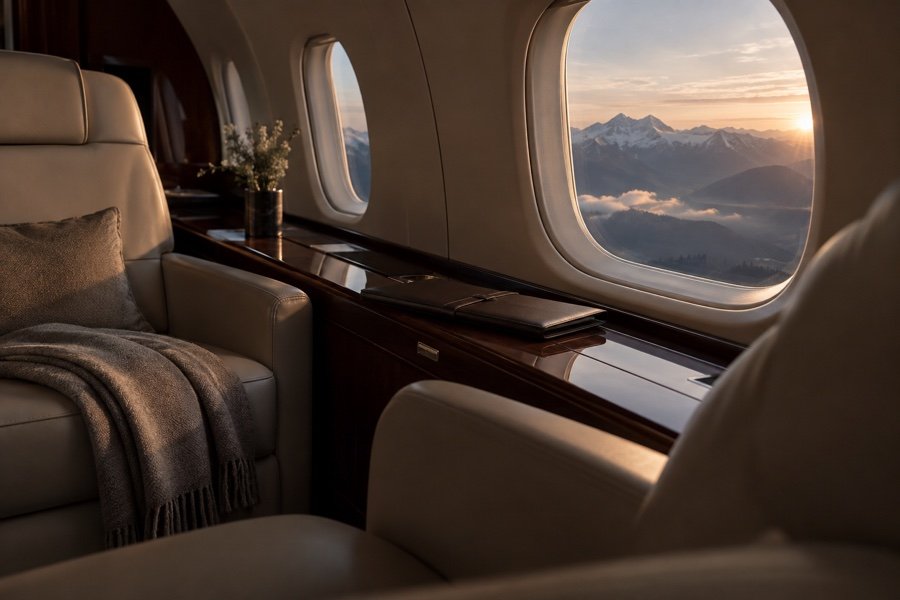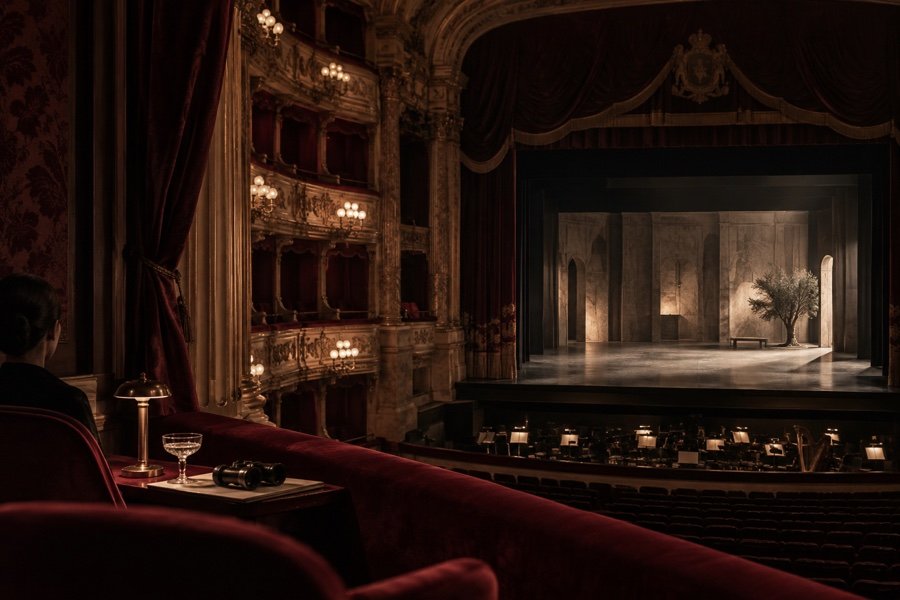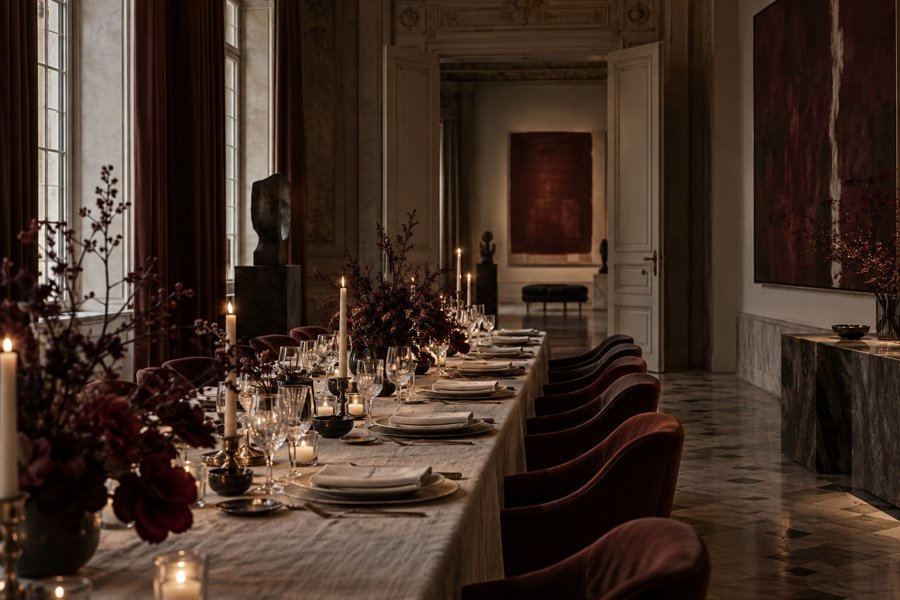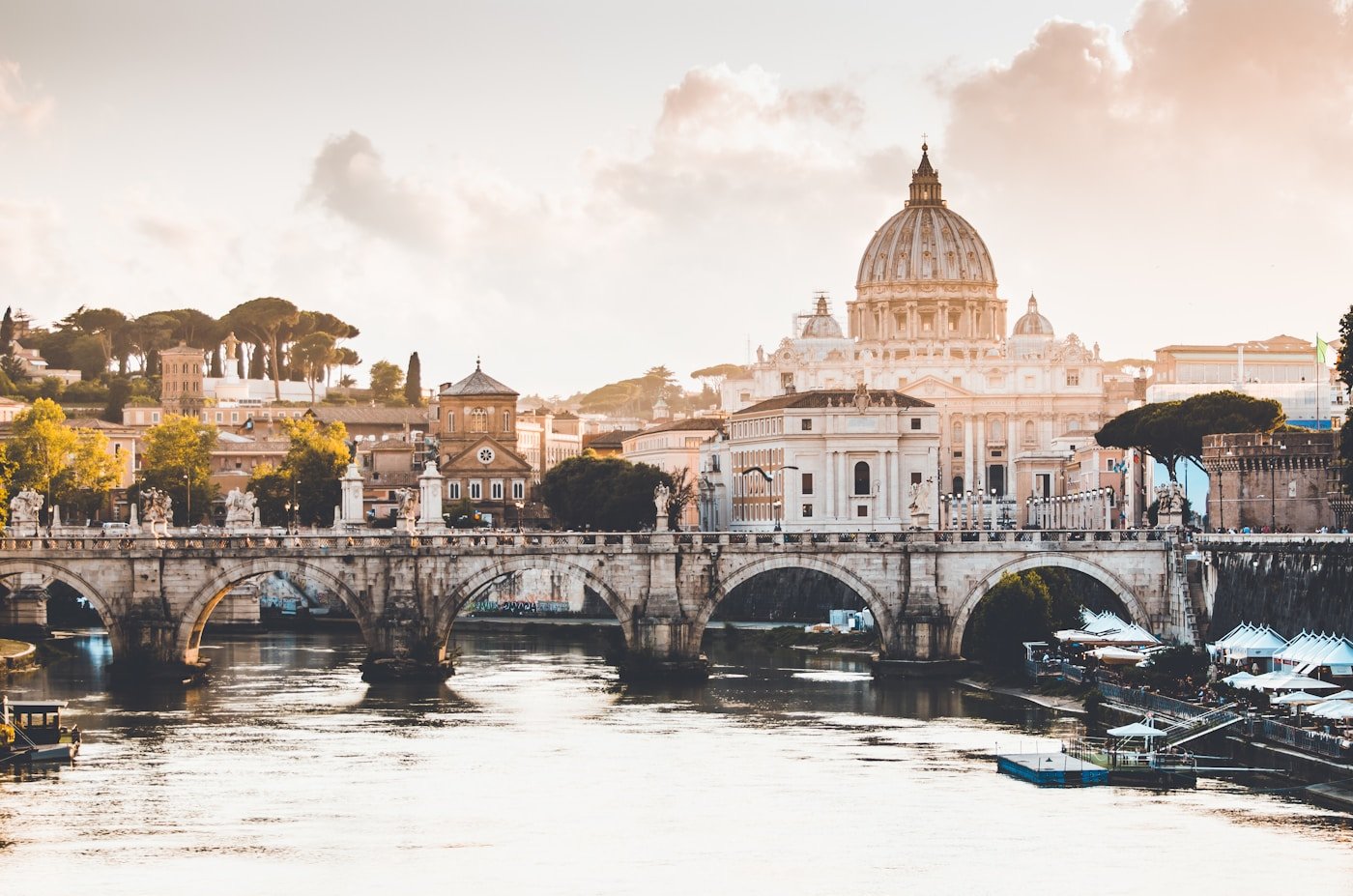
Eleven days, an island, a city, and that rare thing no other film festival manages to produce — the sensation of attending an ancient rendezvous, held in places that might have been chosen to be painted. From 2 to 12 September 2026, the Mostra Internazionale d’Arte Cinematografica returns for its eighty-third edition. The oldest of the major festivals, the Mostra was born in 1932 on the Lido of Venice — before Cannes, before Berlin, before all the others. For our clients who split their year between Saint-Barthélemy and the Mediterranean, Venice in September represents a moment apart: a film festival held in a city that itself has the qualities of a stage set, a constant alternation between the Lido — where the official scene takes place — and Venice — where the evenings that matter unfold. Maison Silaïa composes this Mostra like no other: with a particular sense of what the navigation between the two requires.
Venice Film Festival 2026: the oldest festival in the world
The Mostra Internazionale d’Arte Cinematografica is the oldest film festival in the world. Founded in 1932 as part of the Venice Biennale, it predates its Cannes counterpart by fourteen years and the Berlinale by thirty-five. This antecedence is not anecdotal: it makes the Mostra a rendezvous where cinema inscribes itself in the long history of Italian arts, alongside Venetian painting, baroque architecture, and the tradition of the salon.
The eighty-third edition takes place from Wednesday 2 to Saturday 12 September 2026, on the Lido of Venice. Eleven days of screenings, an official competition for the Golden Lion, several parallel sections — Orizzonti, Fuori Concorso, Venice Classics, the Venice International Film Critics’ Week. Fewer screenings than Cannes, a more modest professional density, but an incomparable artistic and social density.
What distinguishes the Mostra is less the number of films screened than the quality of what unfolds around them. The great jewellery houses — Bulgari, Cartier, Jaeger-LeCoultre — maintain their historic partnerships here. The most celebrated actresses come not only to present a film, but to embody a collection, wear a gown, compose an image that will circulate around the world. The Venetian palazzi, most of them still private residences, open their salons for confidential dinners. The contemporary art foundations — Pinault, Peggy Guggenheim, Prada — organise their own parallel programmes. The Venice Biennale of film takes place each year, the Biennale of art or architecture alternating in even and odd years, together forming a cultural capital that has no equivalent at this date.
For our clients interested in cinema through passion, patronage or informed curiosity, the Mostra offers an experience radically different from Cannes. Where Cannes is a dense and rapid professional capital, Venice is a city that imposes its own rhythm — that of vaporetti which do not stop according to urgency, of bridges that must be crossed, of the water that separates and unites. To come here is to accept slowing down in order to truly see.
“Venice never gives itself entirely. Neither does the Mostra. That is perhaps what, since 1932, has made this festival different from all the others.” — Maison Silaïa
The Lido and Venice: two islands, two rhythms
The Mostra unfolds on two islands that do not resemble each other. The Lido — a long, narrow coastal strip separated from the lagoon by a dyke and two bridges — hosts the official festival, its screenings, its red carpets. Venice — the historic city, its sestieri, its palazzi — hosts the dinners, the evenings, the gatherings that extend the official day. Understanding this bipolarity is already to know how to live the festival.
The Lido, historic home of the Mostra
The Lido is an eleven-kilometre strip of land bordering the lagoon. Peaceful and residential for the rest of the year, it transforms each late summer into the capital of world cinema. The Palazzo del Cinema, inaugurated in 1937 in a characteristic rationalist style, houses the Sala Grande — a thousand-seat hall where official premieres take place. The Lido’s historic hotels — the Hotel des Bains, the Grand Hotel Excelsior, the Hungaria Palace — open their terraces and salons to welcome crews, press, guests.
A typical day at the Lido begins early — the first sessions open at half past eight — and extends into late afternoon. Between screenings, one crosses the promenade along the beach, takes a coffee at the Gran Viale, runs into an actress leaving a fitting or a director returning from a press conference. The Lido’s atmosphere is strange — at once lively and suspended, as if the entire island knew it would not quite be the same in eleven days.
Venice, confidential scene of the dinners
Once the day’s screenings end, the festival crosses the lagoon. It is in Venice that the dinners, the launch evenings, the prolonged gatherings are held. The palazzi along the Grand Canal — Ca’ Sagredo, Ca’ Pisani, the Palazzo Contarini — welcome cinema and jewellery houses in their frescoed eighteenth-century salons. The contemporary foundations — Palazzo Grassi, Pinault Collection, Pinacoteca Giorgio Franchetti — organise their openings in echo to the festival.
This two-tier composition — Lido by day, Venice by evening — imposes a particular rhythm. Crossings take time. One must anticipate. For certain evenings, one must be in Venice from six in the evening. For others, midnight is the most fitting hour.
The crossing between the two: an art in itself
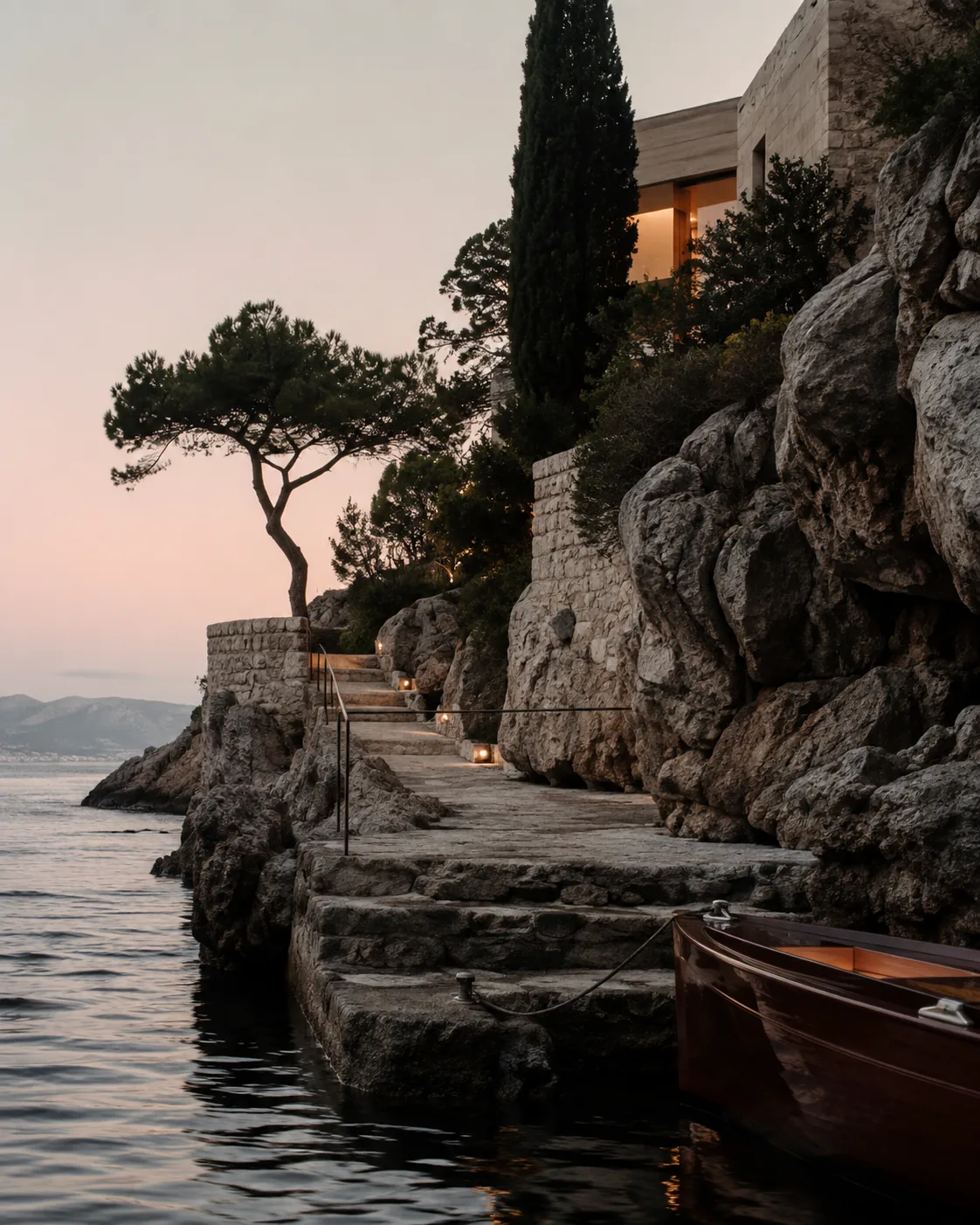
Between the Lido and Venice there is no bridge. Only the lagoon, and the choice between several means of crossing. The public vaporetto takes twenty minutes to reach Saint Mark’s Square from Santa Maria Elisabetta, the Lido’s main stop. Hardly compatible with evening wear or a tight schedule. The water taxi — the celebrated motoscafi of varnished wood — reduces the time to ten minutes and offers the necessary privacy. For our clients, the most effective option is the private motoscafo reserved for the entire stay, with a dedicated pilot who waits at the landing stage, knows the evening schedules, and anticipates the peaks of traffic.
The gatherings that matter
The official festival is a score. The parallel gatherings are its counterpoint — and it is this counterpoint that defines, for those who know how to hear it, the singularity of the Mostra.
The grand premieres at the Palazzo del Cinema
The films in competition are presented first in the Sala Grande, at the start or end of day. The protocol is strict: evening wear required for gala screenings, red carpet arrival, introduction of the director and crew, projection followed by prolonged applause. Access to these sessions requires an official invitation — accredited press, film crew, Biennale partners, patrons. For our clients, access is obtained through introduction via a distribution house, a partner foundation or a programming figure.
The jewellers’ dinners
Bulgari, Jaeger-LeCoultre, Cartier, Chopard — the great jewellery houses maintain a historic relationship with Venice. Their dinners, held in the palazzi of the Grand Canal or in the private rooms of the grand hotels, are key moments of the Mostra. Here one sees the house ambassadors walk, a new collection is presented, a conversation begun at Cannes three months earlier is continued. These evenings close by invitation: for our clients who wear or collect these houses, we orchestrate the introduction in advance.
The evenings in the Venetian palazzi
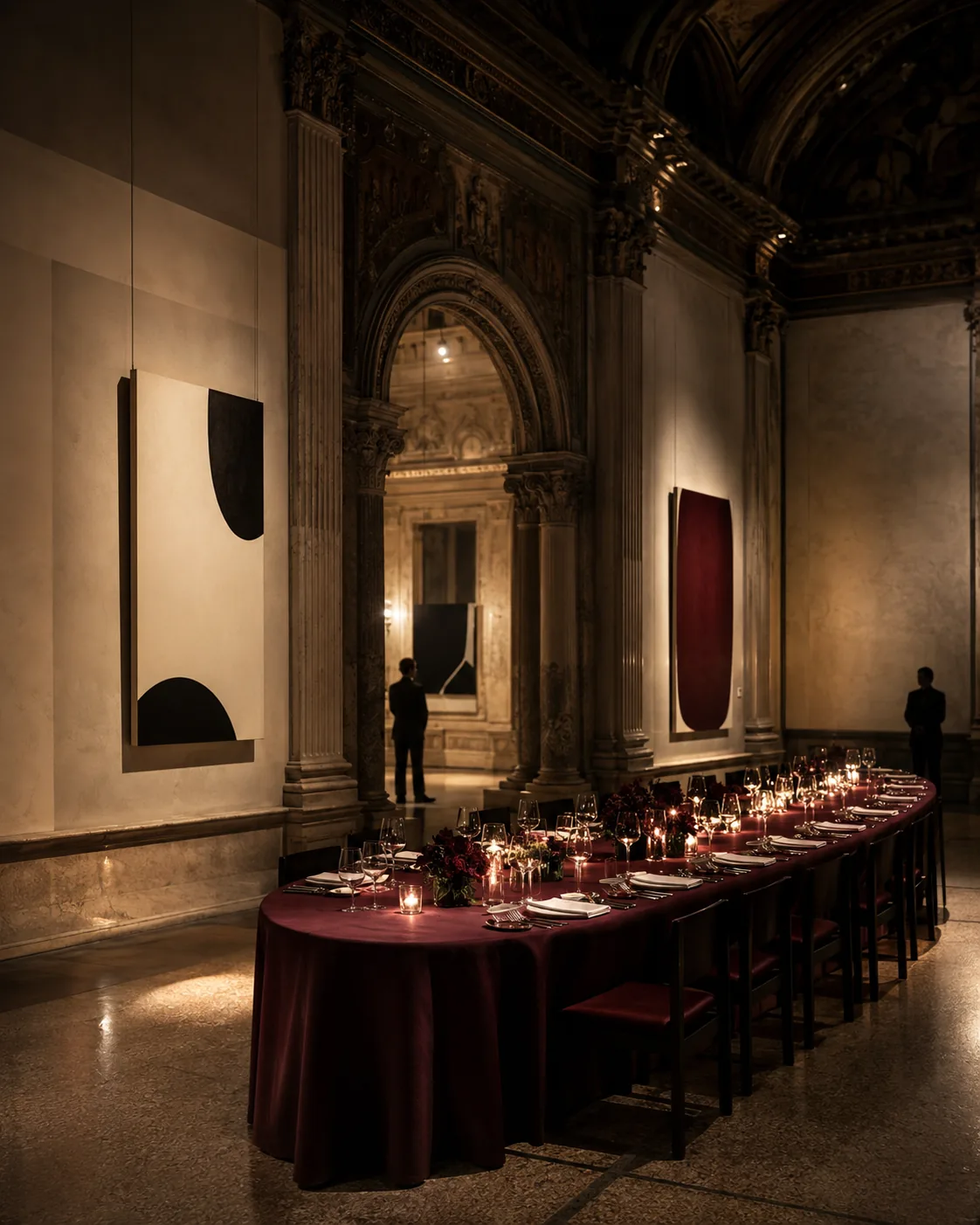
Beyond the great brands, Venice hosts evenings even more confidential. Certain historic families receive in their palazzi in informal settings, gathering ten to thirty guests for a dinner that lasts until dawn. Contemporary art foundations host openings that extend into receptions. Specialised magazines and publishers hold their author dinners. These gatherings appear on no programme. Their existence is passed on by word of mouth, and the invitation is prepared within the ecosystem of relationships that makes Venice — and that our private event orchestration allows our clients to enter.
Accommodation: Lido or Venice?
The question is more decisive in Venice than elsewhere. Whether one chooses to sleep on the Lido or in the historic city, the rhythm of the festival changes radically.
The Excelsior and the grand hotels of the Lido
Residing on the Lido during the Mostra means being within walking distance of the screenings. The Grand Hotel Excelsior, a Moorish-style palace inaugurated in 1908, remains the historic residence of the festival: the red carpet alongside it has welcomed stars for nearly a century. The Hotel des Bains, made famous by Thomas Mann and Visconti, has reopened after restoration. These addresses are booked as soon as the festival dates are announced, eight to ten months in advance.
Residing on the Lido has its virtues: immediate proximity to the screenings, the relative calm of the island, the possibility of returning between two sessions. Its limits too: distance from Venice for the dinners, and dependence on the motoscafo for night journeys.
The palazzo-hotels of Venice
In the historic city, several palazzi have been transformed into exceptional hotels. The Gritti Palace, facing Santa Maria della Salute. Aman Venice, in a sixteenth-century palace. The St. Regis, on the Grand Canal. The Cipriani, on the island of Giudecca, accessible only by private boat. These addresses offer Venetian immersion in its finest form — frescoed salons, terraces opening onto the water, service that knows each guest by name.
Residing in Venice rather than on the Lido changes the narrative of the festival. The screenings become a morning expedition to the island; the evenings are lived in the heart of the city. This configuration suits clients who come for Venice as much as for the Mostra.
Private apartments in the sestiere of San Marco
Beyond the grand hotels, several sestieri — San Marco, Castello, Dorsoduro — offer private apartments of the highest quality: entire palazzo-apartments or private floors in historic residences. This formula allows one to host, to retain total autonomy, and to organise one’s own dinners in a historic setting. The rental is negotiated six to eight months in advance, with a minimum one-week commitment.
Moored yachts
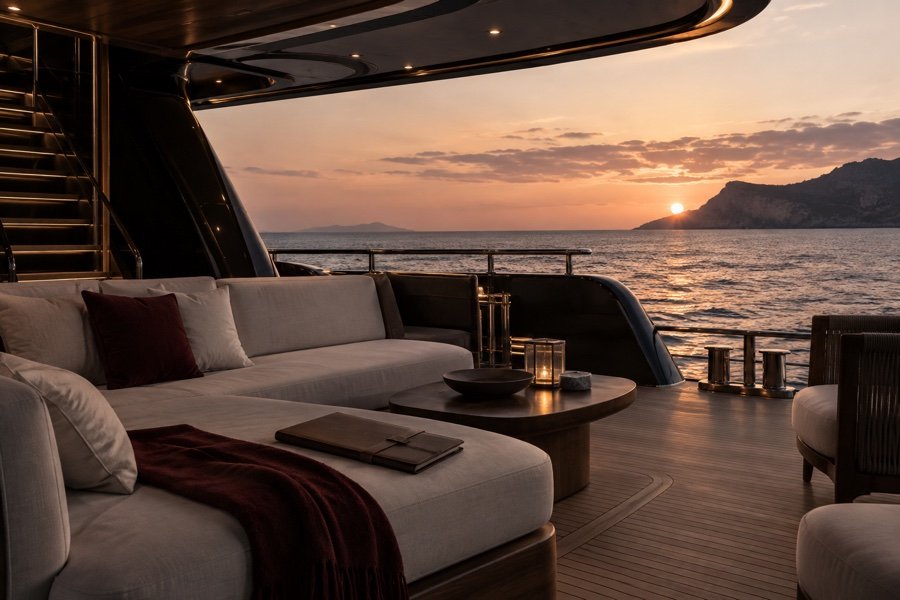
For clients who prefer the continuity of their own space, mooring in Venice or in the lagoon remains possible. Several marinas — the most central being San Giorgio Maggiore, facing Saint Mark’s Square — accommodate yachts up to fifty metres. The yacht then becomes accommodation, reception venue, and observatory — the view of the Salute or the Doge’s Palace from the upper deck has no equivalent.
Access to screenings: the codes to know
The Mostra’s screenings fall into several categories, each with its access codes. Understanding these codes means sparing oneself the chase for invitations.
The Sala Grande: the gala sessions
The Sala Grande hosts the official premieres, at the start or end of the day. The so-called gala sessions, with crew presence, red carpet and evening wear, are the most visible of the festival. Access is by invitation — distribution, production, Biennale partners, patrons. A few places are open to press or industry accreditation holders, subject to availability. For our clients, access is prepared in advance via the relevant houses.
Orizzonti, Fuori Concorso, Venice Classics
Beyond the official competition, several parallel sections offer complementary programming. Orizzonti presents films exploring emerging trends in cinema. Fuori Concorso gathers out-of-competition films by recognised auteurs. Venice Classics presents heritage restorations — often the chance to see, on screen, films one will find on no platform. These sections are more broadly accessible, with more flexible programming.
Distributors’ private screenings
Alongside the official programme, distributors and great houses organise confidential screenings in the private lounges of the Lido’s hotels, sometimes in the Venetian palazzi, occasionally aboard a yacht. These sessions aim to present a film to a restricted circle — investors, selected press, priority buyers. The invitation is built on the positioning one has prepared in advance.
“The true Mostra is lived in two acts: the screening on the Lido, the dinner in Venice. The space in between is itself a way of being there.” — Maison Silaïa
Preparing your visit: the Maison Silaïa method
A Mostra lived well is prepared long in advance. We compose each stay according to a proven method, in four movements.
A confidential brief to set the intention
The first stage is a conversation of two to three hours, conducted in the strictest confidence. The Mostra is lived differently according to the intention: pure cinephilia, patronage, jewellery partnership, social presence, or simple passion for Venice beyond the summer crowds. Each intention opens a different itinerary. This brief determines everything that follows.
Pre-positioning six to eight months ahead
The Mostra’s official selection is announced in July. But the strategic options — hotels, palazzi, private motoscafi, certain introductions — close well before. We activate our address book the preceding spring to secure the critical elements, then complete the programme as the editorial content reveals itself.
Bespoke logistics, tested and pre-confirmed
Arrival in Venice by private jet to Marco Polo airport, transfer by private motoscafo directly to the hotel or palazzo, dedicated pilot for the entire stay, reserve pilot for parallel evenings, selected and reserved accommodation, evening wear and event preparation within the suite, restaurant reservations (Harry’s Bar, Antiche Carampane, Venissa), access to foundations and private visits. Nothing is left to verify during the festival.
A presence that is both attentive and invisible
During the eleven days, a single dedicated contact remains reachable at any hour. She adjusts the agenda in real time, shifts an appointment, reserves the table one can no longer find, arranges an improvised lunch at Locanda Cipriani in Torcello. This accompaniment continues the bespoke experiences we compose for our clients throughout the year.
Frequently asked questions
When and where does the Venice Film Festival 2026 take place?
The Venice Film Festival 2026 — eighty-third edition — takes place from Wednesday 2 to Saturday 12 September 2026, on the Lido of Venice. Official screenings are held at the Palazzo del Cinema and in the annex halls of the Lido. Dinners and parallel evenings are held mainly in Venice.
What is the difference from the Cannes Film Festival?
Cannes is a dense professional capital, with a Marché du Film of fifteen thousand accreditees and an international rights economy. The Mostra is more artistic, more intimate, more Italian. Fewer screenings, less commercial pressure, but an artistic density and a relationship to Italian arts without equivalent. The two festivals are complementary more than competing.
How does one access the main screenings?
Gala sessions in the Sala Grande are accessed by invitation — distribution houses, production teams, Biennale partners, patrons. A few places are open to press or industry accreditation holders, subject to availability. Our teams prepare introductions in advance via the relevant networks.
Where to stay: Lido or Venice?
The answer depends on intention. The Lido offers immediate proximity to the screenings, in the historic hotels (Excelsior, Hotel des Bains). Venice offers immersion in the historic city, the palazzo-hotels (Gritti, Aman, Cipriani) and private palaces turned into hotels. Some clients combine both: Lido for the first half of the festival, Venice for the second.
Can Maison Silaïa organise a complete stay during the Mostra?
Yes. Maison Silaïa takes charge of an entire stay: selected and reserved accommodation (Lido, Venice or yacht), private jet to Marco Polo, private motoscafo for the entire stay, access to screenings, invitations to dinners and evenings, private visits to foundations and palaces, discreet accompaniment throughout the eleven days. Let us speak in complete confidence about your project.
What if your Venice Film Festival 2026 began to take shape today?
A well-lived Mostra is prepared in the spring. Our teams remain at your disposal to compose your stay — Lido, Venice, palazzo, private motoscafo, invitations — in complete confidence.
Get in touch